Bulk Enzyme for Shrimp Feed Mills
Pelletide supplies bulk enzyme inputs for shrimp feed manufacturers balancing soybean meal inclusion, plant protein variability, phosphorus efficiency, mineral availability, pellet quality, and dependable mill-scale supply.
As an enzyme supplier for aquafeed manufacturing, we work with nutrition, procurement, and production teams that need formulation-ready enzyme solutions—not generic ingredients with unclear fit. Our focus is shrimp feed: practical nutrient release, compatibility with common premix systems, and supply programs built for industrial aquafeed mills.
Enzyme inputs for shrimp feeds using soybean meal and plant proteins
Shrimp formulations increasingly depend on soybean meal, soy protein concentrate, rapeseed meal, sunflower meal, wheat byproducts, rice bran, and other plant-based inputs. These materials can improve cost position and sourcing flexibility, but they also introduce antinutritional factors, bound phosphorus, non-starch polysaccharides, protein variability, and mineral access challenges.
Pelletide supports bulk enzyme strategies for mills working to improve:
- Nutrient release from soybean meal and mixed plant proteins
- Phosphorus and trace mineral availability from phytate-bound fractions
- Protein and amino acid access in variable raw-material matrices
- Gut-compatible digestion support for intensive shrimp feeding programs
- Formulation flexibility when fishmeal replacement or raw-material cost pressure increases
- Consistent inclusion through premix, micro-ingredient, or post-process systems
Built for nutritionists who measure ration performance
Shrimp feed enzyme decisions are usually made at the intersection of formulation economics and biological performance. Pelletide helps buyers evaluate enzyme selection against real production priorities:
FCR and digestible nutrient value
Enzyme use should support ration performance by unlocking nutrients already present in the formula. We help nutrition teams align enzyme selection with target ingredients, expected substrate levels, and digestibility objectives.
Raw-material flexibility
When soybean meal quality, plant protein source, or bran inclusion changes, enzyme strategy can help reduce the nutritional penalty of less predictable materials. Pelletide supports mills seeking broader procurement flexibility without losing sight of shrimp performance.
Mineral and phosphorus efficiency
Phytate-bound phosphorus can limit mineral availability and increase formulation cost. Pelletide supplies enzyme inputs designed to support better release of bound phosphorus and associated minerals in plant-rich shrimp feeds.
Pellet and water-stability considerations
Shrimp feed must hold up through handling and water exposure. Enzyme decisions must therefore respect conditioning, extrusion, coating, drying, oil application, and finished pellet targets. Pelletide discusses enzyme format and application point in the context of your process—not in isolation.
Bulk supply options for shrimp feed mills
Pelletide is built for B2B procurement. We support bulk enzyme sourcing for aquafeed mills that require repeatable documentation, predictable delivery, and practical technical alignment before scale-up.
Typical supply requirements we support include:
- Bulk ordering for continuous shrimp feed production
- Ingredient documentation for purchasing and quality teams
- Batch traceability and consistency records
- Formulation and application guidance for plant-protein diets
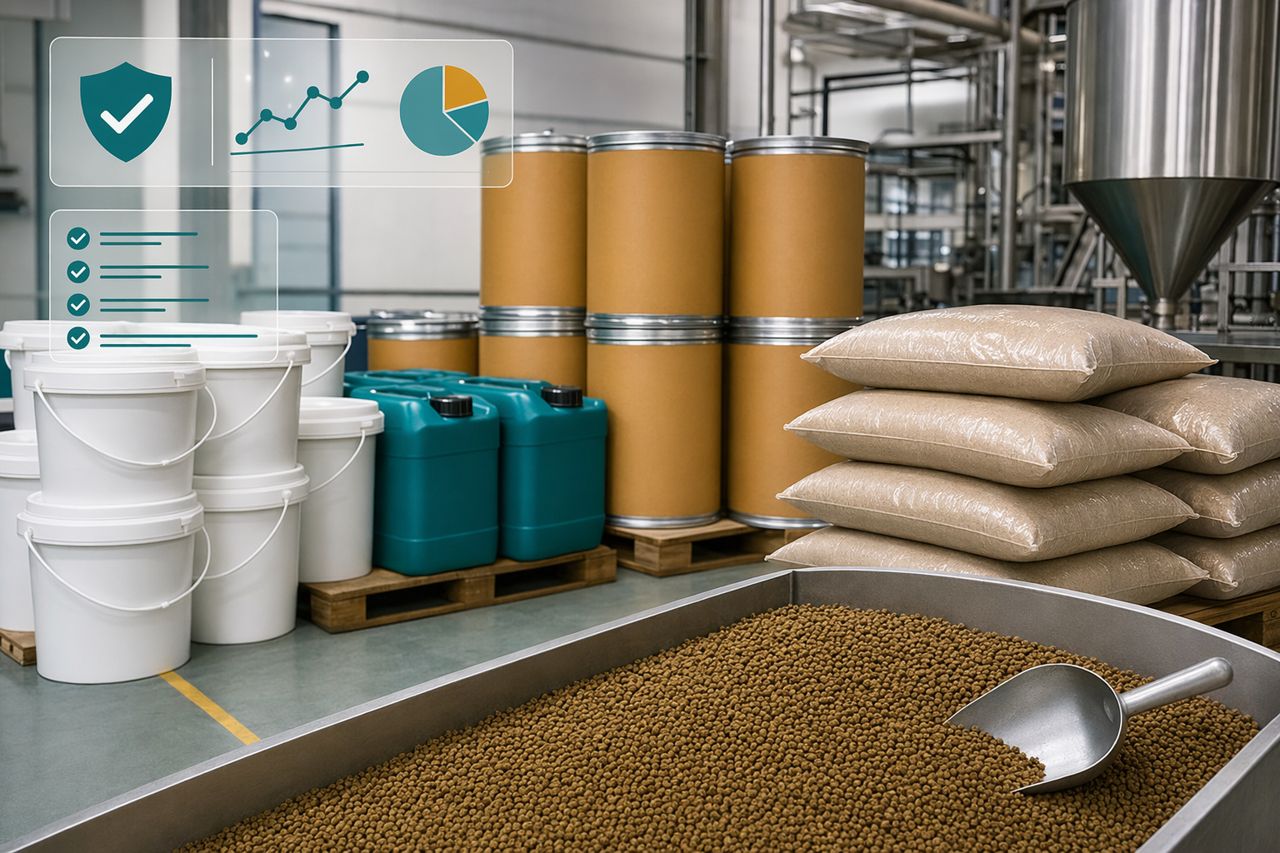
- Packaging formats suited to industrial handling
- Coordination with premix suppliers, toll blenders, or in-house micro-dosing systems
- Supply planning for seasonal production peaks
Enzyme categories commonly evaluated in shrimp feed
Pelletide can support single-enzyme or blended-enzyme strategies depending on formula structure, processing route, and commercial objective.
Phytase for phosphorus and mineral release
Used in plant-rich diets where phytate can bind phosphorus and minerals. The buyer objective is typically reduced dependency on inorganic phosphorus sources, improved mineral access, and better use of plant-based ingredients.
Protease for protein utilization support
Evaluated where soybean meal, plant concentrates, and other protein sources vary in digestibility. The goal is to support protein breakdown and amino acid access while maintaining ration cost control.
Carbohydrase systems for plant cell-wall fractions
Xylanase, beta-glucanase, cellulase, and related enzyme classes may be considered where non-starch polysaccharides and fiber fractions influence nutrient access, gut conditions, or feed efficiency.
Custom blend alignment
For many shrimp mills, the strongest commercial fit is not a one-enzyme answer. Pelletide can help evaluate whether a targeted blend is more appropriate for soybean meal-heavy, mixed plant-protein, or high-bran formula families.
Process compatibility matters in aquafeed manufacturing
Shrimp feed production is not a lab environment. Enzyme selection needs to account for industrial realities such as mixing order, conditioning profile, extrusion exposure, drying temperature, liquid coating, oil addition, and warehouse conditions.
Pelletide helps buyers consider:
- Whether the enzyme should be included through premix or applied after heat exposure
- How formulation families affect substrate availability
- Whether coating systems or liquid application are appropriate
- How to protect consistency during bulk handling and storage
- How to integrate enzyme use without disrupting plant throughput
A practical supplier discussion, not a generic catalog pitch
Before quoting, we ask for the details that determine whether an enzyme input is commercially useful:
- Target shrimp species and life stage
- Current and planned soybean meal or plant protein inclusion
- Main performance goal: FCR, mineral release, cost reduction, or formulation flexibility
- Processing route and likely application point
- Monthly or quarterly volume requirement
- Preferred packaging and delivery schedule
- Documentation needs for procurement and quality assurance
This allows Pelletide to recommend a bulk supply path that fits your mill, formula system, and procurement calendar.
Why shrimp feed manufacturers work with Pelletide
- Focused on aquafeed mill requirements, not retail ingredient sales
- Buyer-friendly technical support for nutrition and purchasing teams
- Bulk enzyme supply aligned to plant-scale feed manufacturing
- Clear discussion of substrate fit, process compatibility, and commercial objective
- Dependable documentation and lot traceability for industrial buyers
- Practical quote process for mills comparing enzyme options across formula families
Request a quote for bulk shrimp feed enzymes
If your shrimp feed mill is evaluating enzyme inputs for soybean meal, plant proteins, phosphorus release, mineral availability, or FCR support, Pelletide can help you define the right supply option.
Use the on-site request form and include your target formula type, monthly volume estimate, processing route, and main performance objective. A Pelletide specialist will review the requirement and respond with a tailored bulk quote.