Fish Feed Digestibility Enzyme Buying Guide
For aquafeed nutritionists, a digestibility enzyme is not a generic additive. It must fit the species, the ingredient basket, the extrusion process, the coating plan, and the mill’s tolerance for variation.
Pelletide supplies enzyme solutions for aquafeed manufacturing teams that need practical support for nutrient release, raw-material flexibility, feed conversion potential, phosphorus economics, and pellet specifications at plant scale.
What a fish feed digestibility enzyme should do
A well-selected enzyme system helps the formulation team reduce nutritional waste locked inside protein meals, cereals, oilseed ingredients, pulses, and other plant-derived raw materials.
In aquafeed, the value is usually measured through buyer outcomes:
- Support more complete nutrient release from selected raw materials
- Improve flexibility when fishmeal or premium ingredients are constrained
- Help maintain ration performance when plant protein levels rise
- Support feed conversion potential through better digestive access
- Improve phosphorus utilization strategy and reduce dependence on inorganic phosphorus inputs
- Protect pellet durability, water stability, and coating compatibility by fitting the process instead of fighting it
The main enzyme choices for aquafeed mills
Protease support for protein-rich fish diets
Protease can be relevant where formulas include fishmeal alternatives, soybean meal, poultry meal, rendered meals, fermented ingredients, or other protein sources with variable digestibility.
For carnivorous species, protease selection should focus on digestive fit, ingredient variability, and compatibility with the finished feed process. The objective is not to replace formulation discipline, but to help the animal access more of the protein value already paid for in the ration.
Carbohydrase support for plant-protein and cereal inclusion
As aquafeed formulas move toward soybean meal, wheat products, pulses, rapeseed ingredients, sunflower meals, and regional coproducts, non-starch polysaccharides can reduce nutrient access and increase viscosity-related challenges in the gut.
Carbohydrase options such as xylanase, beta-mannanase, beta-glucanase, and complementary blends can support better access to nutrients in plant-rich diets. The right choice depends on the raw-material matrix, not a one-size-fits-all enzyme label.
Phytase support for phosphorus strategy
Phytase is often evaluated for its role in releasing phytate-bound phosphorus from plant ingredients. In aquafeed mills, the purchasing case is typically linked to phosphorus cost, mineral balance, discharge considerations, and consistent performance across diets.
Phytase selection should consider feed form, process exposure, coating sequence, and how the nutrition team credits the enzyme in the formulation system.
Buying criteria for an aquafeed enzyme supplier
When comparing enzyme suppliers for aquafeed manufacturing, Pelletide recommends evaluating the commercial fit as carefully as the enzyme type.
1. Species and life-stage relevance
A trout diet, tilapia diet, salmonid grower, marine fish formula, shrimp-adjacent feed program, and omnivorous freshwater ration do not create the same enzyme brief. Ask for a recommendation that reflects the species, life stage, feed format, and the practical performance target.
2. Ingredient-matrix fit
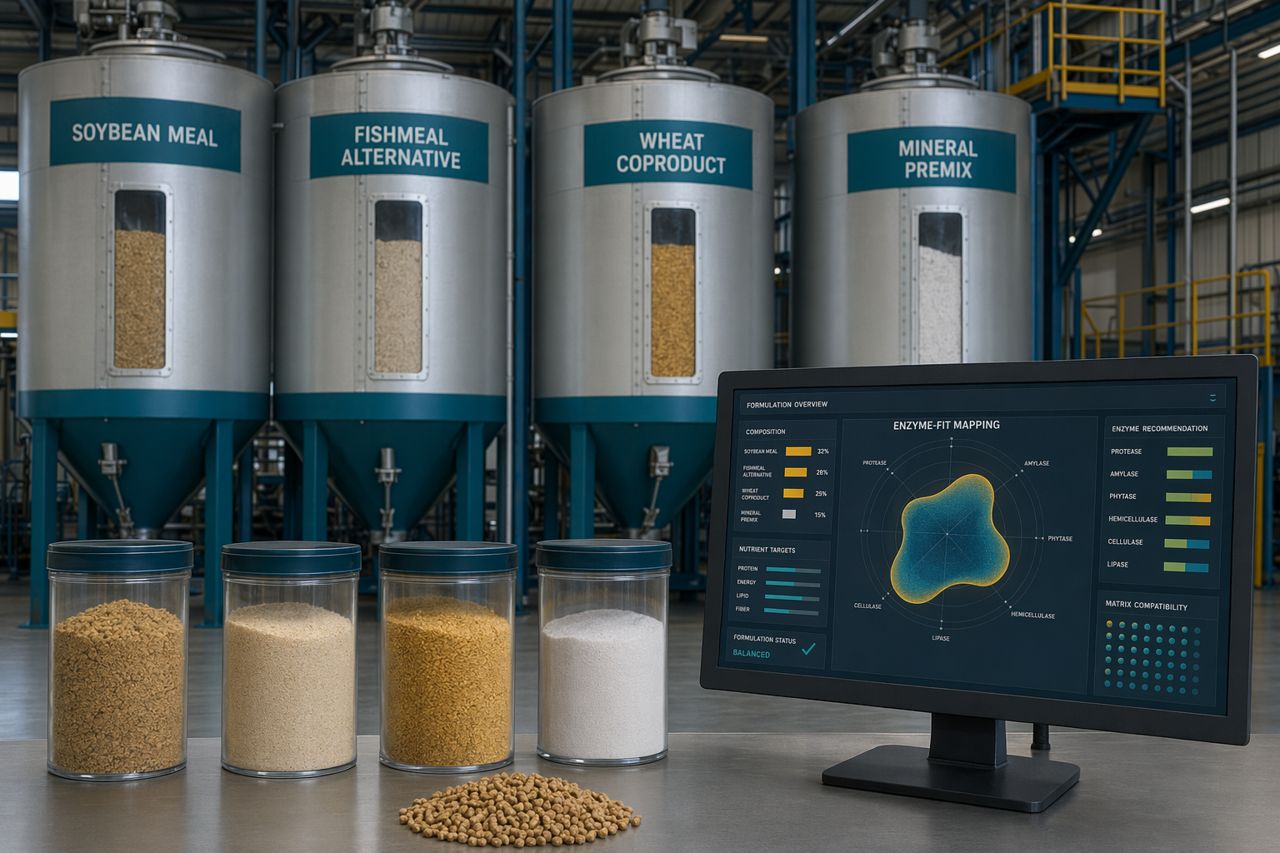
The enzyme should be matched to what is actually in the formula. Key inputs include:
- Fishmeal level and replacement strategy
- Soybean meal, soy protein concentrate, or fermented soy use
- Wheat, wheat middlings, corn gluten, rice bran, or other cereal fractions
- Pulses, rapeseed, sunflower, or regional protein meals
- Mineral phosphorus strategy
- Oil coating and attractant system
3. Process compatibility
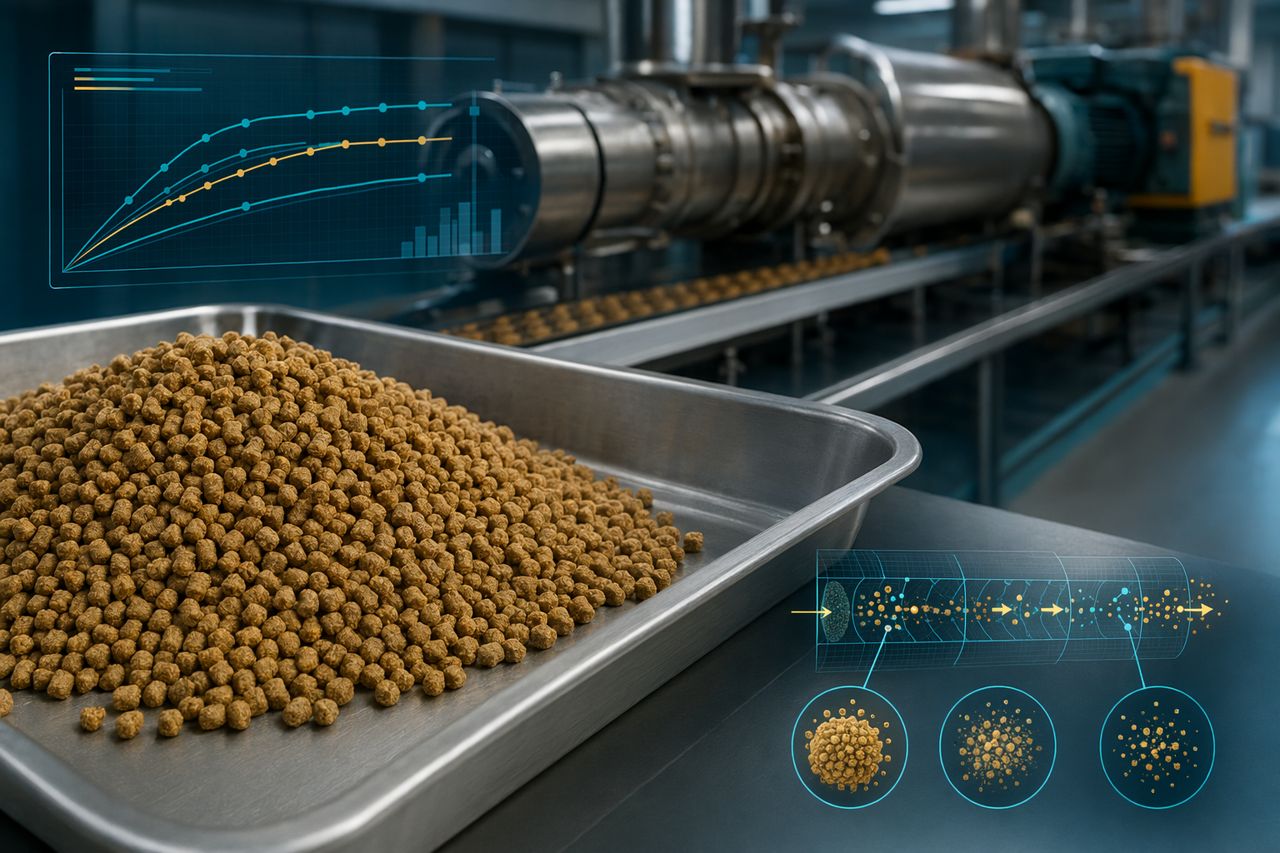
Aquafeed manufacturing exposes enzymes to mixing, conditioning, extrusion, drying, cooling, coating, and storage. The right supply format depends on where the enzyme is introduced and how the mill protects activity through the process.
Common questions include:
- Will the enzyme be used in mash, before extrusion, or through a liquid application step?
- Is post-extrusion coating preferred for process protection?
- Does the product fit current dosing and handling equipment?
- Will it disperse evenly without harming pellet finish?
- Can the supplier support scale-up beyond a trial batch?
4. Pellet and water-quality considerations
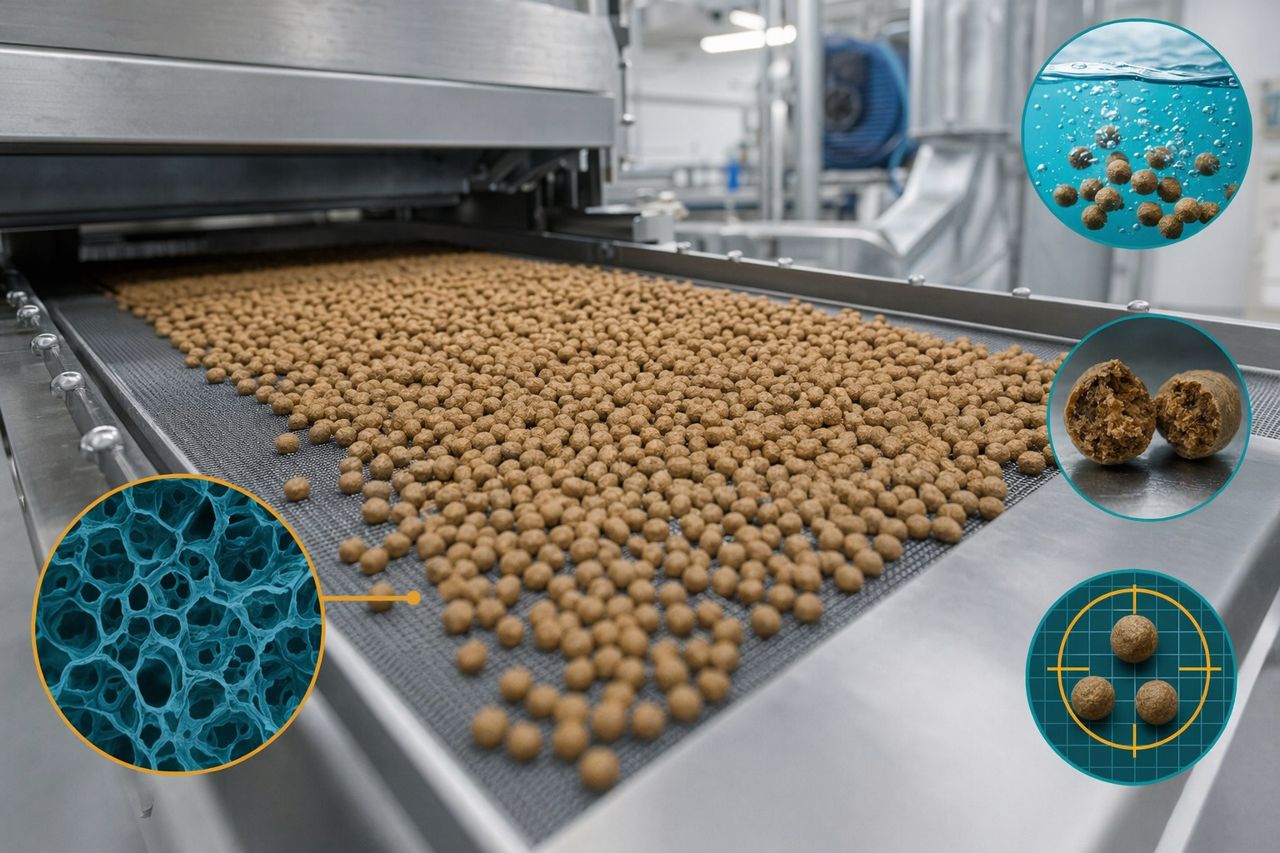
Digestibility support should not create pellet problems. Evaluate whether the enzyme system is compatible with binder strategy, fat coating, attractants, water stability expectations, and packaging conditions. A digestibility enzyme that complicates finished feed quality is not a practical mill solution.
5. Supply continuity and documentation
Aquafeed mills need dependable supply, clear product documentation, and batch-to-batch consistency. A supplier should be able to support purchasing, quality, nutrition, and production teams with the same level of clarity.
Where Pelletide fits
Pelletide works with aquafeed manufacturers that want enzyme guidance tied to ration value and production reality. We help buyers narrow the enzyme brief before quoting, so the selected option fits the formula, the plant, and the commercial target.
Typical Pelletide support includes:
- Enzyme selection for fish diets with high plant-protein inclusion
- Protease, carbohydrase, phytase, or blended enzyme recommendation pathways
- Review of target species, formula constraints, and raw-material variability
- Process-fit guidance for extrusion, coating, and finished feed handling
- Commercial supply planning for recurring production
- Quote support for purchasing teams and technical decision makers
Faceless explainer video: digestibility fit for aquafeed mills
This page includes a short faceless explainer video showing how enzyme selection connects raw materials, extrusion, nutrient release, and finished feed value. It is designed for nutrition, procurement, and mill leadership teams reviewing enzyme supply options.
Questions to answer before requesting a quote
To help us recommend the right enzyme pathway, share as much of the following as practical:
- Target species and life stage
- Feed type and pellet format
- Main protein and cereal ingredients
- Current plant-protein inclusion challenge
- Desired outcome: digestibility, FCR potential, phosphorus strategy, ingredient flexibility, or cost control
- Intended application point in the mill
- Packaging, storage, and shipment requirements
- Expected production rhythm or purchasing frequency
Request a quote
If you need an enzyme supplier for aquafeed manufacturing, Pelletide can review your formulation target and process requirements before quoting.
Request a quote through the on-site form
Tell us what species, ingredients, and production process you are working with. We will respond with a practical enzyme supply recommendation and next-step quote details.